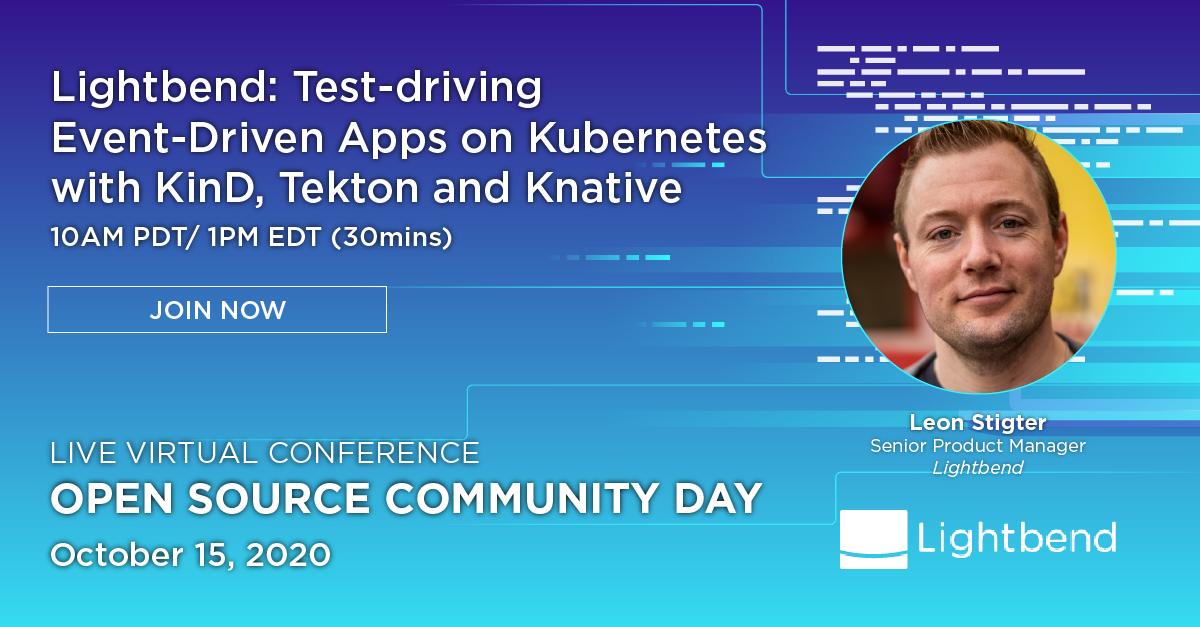
Test-driving Event-Driven Apps on Kubernetes
  1. Blog/

Test-driving Event-Driven Apps on Kubernetes

·1 min·
Table of Contents

As developers, we all want to be more productive. Knative, a Kubernetes-based platform to deploy and manage modern serverless workloads, helps to do just that. The idea behind Knative is to abstract away the complexity of building apps on top of Kubernetes as much as possible, and Tekton is a powerful and flexible open-source CI/CD tool. How can you bring those two together on your local machine to try a few things out or even develop your apps? During this talk, we looked at setting up a KinD cluster, bootstrapping Knative and Tekton, and deploying an app!

Talk materials
#

The tools I used:

The KinD configuration I used to create a cluster

kind: Cluster
apiVersion: kind.x-k8s.io/v1alpha4
nodes:
- role: control-plane
  extraPortMappings:
  - containerPort: 31080
    hostPort: 80

Related

Deploying your first app on the Kubernetes based Knative platform

·1 min
As developers, we all want to be more productive. Knative, a Kubernetes based platform to deploy and manage modern serverless works, helps to do just that. The idea behind Knative is to abstract away the complexity of building apps on top of Kubernetes as much as possible. How can you get Knative running on your local machine to try a few things out or even develop your apps? In this session, we ’ll look at setting up a Kubernetes cluster, installing Knative, and building an app.

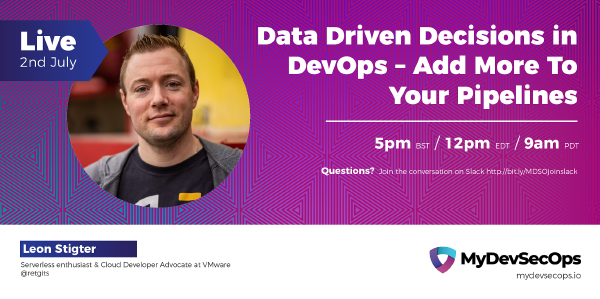
Data Driven Decisions in DevOps @ MyDevSecOps

·4 mins
With everything going on in DevOps, I think we can safely say that building pipelines is the way to deploy your applications to production. But knowing what you deploy to production and whether it is actually okay needs more data, like security checks, performance checks, and budget checks. We’ve come up with a process for that, which we call Continuous Verification “A process of querying external systems and using information from the response to make decisions to improve the development and deployment process.” In this session, we’ll look at extending an existing CI/CD pipeline with checks for security, performance, and cost to make a decision on whether we want to deploy our app or not.

Automated DevOps for the Serverless Fitness Shop

·4 mins
In a nutshell, Continuous Verification is about putting as many automated checks as possible into your CI/CD pipelines. These checks call out to external systems to validate performance, security, and cost — without asking your engineers to do that manually. The same systems that decide whether a deployment goes to production can also help engineers understand where the bottlenecks are. More checks in the pipeline means fewer manual tasks, less overhead, and better decisions about what actually ships. And yeah, maybe a bit more time at the beach.