Chief data officers, data platform administrators, architects, owners, and consumers are looking to simplify data access permissions and governance. AWS Lake Formation makes it easier to centrally govern, secure, and globally share data for analytics and machine learning use cases. Join this session to learn about new capabilities, customer stories, and how you can get the most out of Lake Formation.
A modern data strategy is a comprehensive plan for how you manage, access, analyze, and act on data. Most companies are already building roadmaps toward that goal, but the gap between “we have a plan” and “we’re getting value from our data” can be significant.
This session covers how deploying a modern data architecture on AWS helps close that gap — navigating common data challenges, streamlining analytics processes, and getting to business insights faster. We take a closer look at AWS Glue and AWS Lake Formation specifically, and how they accelerate the journey.
One of the hardest things in product is articulating your organization’s unique ability to deliver value to its market. It’s also one of the most important. So how do you build a path that combines innovation, proven methodology, and practical approaches to identify the attributes and differentiators that set you apart from your competitors?
One of the things I love about serverless is that I never have to be bothered with managing servers, it’s just using a service like Lambda, Cloud Run, etc and my code is running. If I want to use a database I can rely on services like DynamoDB or CosmosDB. While I think that is absolutely great, it feels like serverless is only for stateless processes. I think serverless needs a bold and stateful vision so that we can build any type of application (stateful and stateless) without ever managing servers. In this talk, I’ll touch on why statefulness matters and how stateful serverless makes patterns like Event Sourcing and CQRS available to anyone.
In the session I went over why serverless is important to our industry, why server admins (which I then rephrased to SREs) are so important to our serverless success, and why stateless isn’t the answer for everything. Technology wise I’ll be “all over the map” talking about things like Knative and the VMware Event Broker Appliance, AWS Lambda, Akka Serverless
As developers, we all want to be more productive. Serverless helps you do just that, by letting you focus on the business logic while shifting operations somewhere else. As more companies discover this emerging technology, we also discover drawbacks like state management. In this session, I focused on what serverless is, how it helps developers, what potential drawbacks exist, and how we can add state management into serverless.
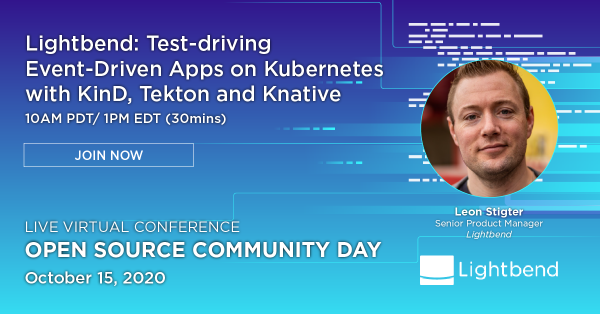
As developers, we all want to be more productive. Knative, a Kubernetes-based platform to deploy and manage modern serverless workloads, helps to do just that. The idea behind Knative is to abstract away the complexity of building apps on top of Kubernetes as much as possible, and Tekton is a powerful and flexible open-source CI/CD tool. How can you bring those two together on your local machine to try a few things out or even develop your apps? During this talk, we looked at setting up a KinD cluster, bootstrapping Knative and Tekton, and deploying an app!
As developers, we all want to be more productive. Knative, a Kubernetes based platform to deploy and manage modern serverless works, helps to do just that. The idea behind Knative is to abstract away the complexity of building apps on top of Kubernetes as much as possible. How can you get Knative running on your local machine to try a few things out or even develop your apps? In this session, we ’ll look at setting up a Kubernetes cluster, installing Knative, and building an app.
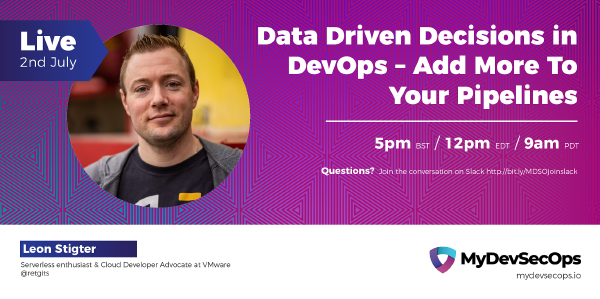
With everything going on in DevOps, I think we can safely say that building pipelines is the way to deploy your applications to production. But knowing what you deploy to production and whether it is actually okay needs more data, like security checks, performance checks, and budget checks. We’ve come up with a process for that, which we call Continuous Verification “A process of querying external systems and using information from the response to make decisions to improve the development and deployment process.” In this session, we’ll look at extending an existing CI/CD pipeline with checks for security, performance, and cost to make a decision on whether we want to deploy our app or not.