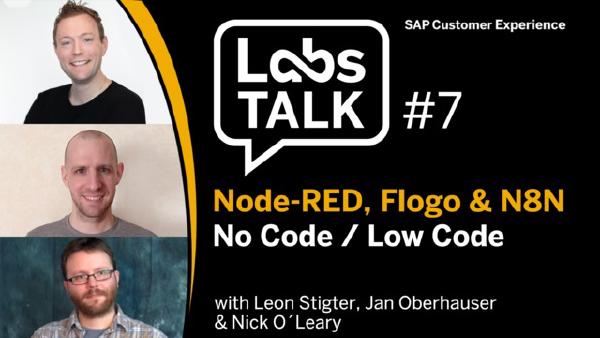
One of my strong beliefs is that coding should be available to everyone. Whether that is a seasoned developer or someone who just wants to connect two systems together. With Project Flogo, we’ve made it possible for everyone to use the same constructs. If you want to use the web-based flow designer, that’s awesome! If you want to write your apps using the Go API, that’s awesome too. In this podcast I joined Jan Oberhauser (N8N), Nick O’Leary (Node Red), and the SAP Customer Experience Labs team to discuss No Code / Low Code.
When I started this series on creating infrastructure as code on AWS with Pulumi, I knew the team was actively improving Go support. What I didn’t expect was how quickly those improvements would land and how much cleaner the code would get. This post revisits some of the earlier code and updates it to the new SDK.
I’ve used Pulumi to do a bunch of things so far: creating subnets in a VPC, building EKS clusters, and DynamoDB tables. The one thing I hadn’t tried yet was deploying Lambda functions, so that’s what this post covers.
As a developer, I’ve built apps and wrote code. As a cheesecake connoisseur, I’ve tried many different kinds of cheesecake. After I got to talk to some of the bakers, I realized that building apps and baking cheesecake have a lot in common. It all starts with knowing and trusting your ingredients.
According to Tidelift, over 90 percent of applications contain some open source packages. Developers choose open source because they believe it’s better, more flexible, and more extendible. A lot of developers also fear how well packages are maintained and how security vulnerabilities are identified and solved.
In previous posts, I used Pulumi for VPCs, subnets, and EKS clusters. Most apps also need a datastore, so this post covers creating a DynamoDB table.
At re:Invent, AWS introduced the ability to run EKS pods on AWS Fargate, and Fargate is cheaper than hosting Kubernetes yourself. In the last post I created an EKS cluster, so this one adds a Fargate profile to it.
Building a Kubernetes cluster from scratch is hard, which is why managed services exist. In the previous post I added subnets to a VPC. This post uses that VPC to create an AWS EKS cluster.
In the previous post, I used Pulumi to create a VPC. This post picks up where that left off and adds subnets to it.
Your source code is only one piece of what goes into production. You also need API gateways, S3 buckets, VPCs, and other infrastructure. Configuring those by hand is tedious and error-prone. Pulumi lets you define all of that in the same language you build your app in.