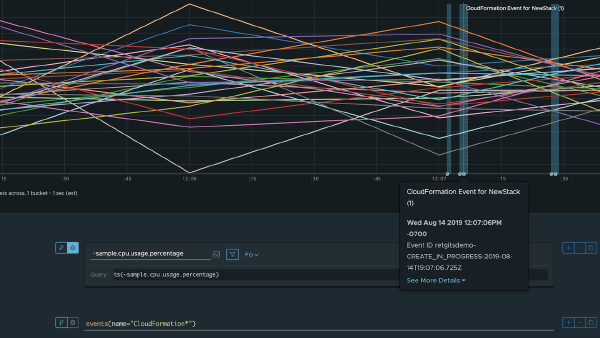
Imagine this, it’s 5pm on a Friday afternoon and while you really want to go enjoy the weekend, you also need to deploy a new version of your app to production. Using AWS CloudFormation (CF), you add a new instance to your fleet of EC2 instances to run your app.
Sometimes you need to get data from cloud-based systems into an environment that doesn’t expose APIs or ports to the outside world. Webhooks help, but you still need something that accepts them and gets them across your firewall. That’s exactly where Solace PubSub+ Cloud comes in. I built a small webhook forwarder app that receives data from Solace and sends it onward without any of my systems being exposed to the internet.
I’ve been playing with OpenFaas ever since I learned about Minikube a few years ago, so when one of my colleagues mentioned Google’s Distroless project I obviously needed to see if my Go projects could work using those images too.
Serverless platforms have been getting a lot of attention. AWS announced a ton of things at their annual user conference, Google announced support for Go in private beta and serverless containers in private alpha, and even Gitlab announced some form of serverless support. With all the big players, it’s easy to overlook the smaller ones — but they’re often the most interesting.
I can hear you think “Part 2?! So there actually is a part 1?” 😱 The answer to that is, yes, there most definitely is a part 1 (but you can safely ignore that 😅). In that part I went over deploying Flogo apps built with the Flogo Web UI using the Serverless Framework. Now, with the Go API that we added to Flogo, you can mix triggers and activities from Flogo (and the community) with your regular Go code and deploy using the Serverless Framework.
Building multi-platform event-driven microservices and functions can get complicated fast. In this short webinar hosted by DZone, I cover how to use Project Flogo to build event-driven microservices and functions that target both Kubernetes and AWS Lambda — without losing your mind in the process.
This post walks through building a Slack bot that responds to a /cat slash command with cat facts. The bot is built with Project Flogo, runs on AWS Lambda, and is exposed through API Gateway. The whole thing takes about 15 minutes to set up.
As the AI-fueled, edge-exposed, blockchain-driven, and streaming analytics-enabled use cases of the future move closer into view, new technologies are needed to make the vision real. Unique and complex workloads accompany the use cases of the future, but luckily, the enabling technologies to compute those workloads have already arrived.
Join TIBCO and AWS for an exciting webinar to help you better understand what serverless architecture is all about, and the benefits of running your apps in a serverless environment. Before you give a listen, how about a quick introduction?
I get to work with serverless microservices on a daily basis, those are services I use myself and ones I help our customers build to take advantage of the benefits that serverless brings you. With many services needing to be deployed and continuous updates, I found myself doing the same thing over and over. It is that specific task that frustrates me most; it simply wasn’t as seamless as I thought it could be.
In this article, I’ll walk you through how I cut the development time and make deployments easily repeatable like a walk in the park — thanks to the combination of the Serverless Framework and a tool called Project Flogo.