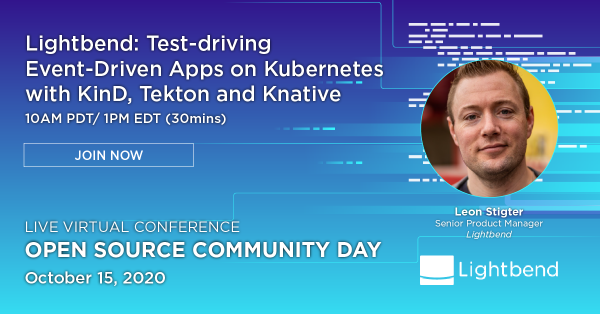
As developers, we all want to be more productive. Knative, a Kubernetes-based platform to deploy and manage modern serverless workloads, helps to do just that. The idea behind Knative is to abstract away the complexity of building apps on top of Kubernetes as much as possible, and Tekton is a powerful and flexible open-source CI/CD tool. How can you bring those two together on your local machine to try a few things out or even develop your apps? During this talk, we looked at setting up a KinD cluster, bootstrapping Knative and Tekton, and deploying an app!
As developers, we all want to be more productive. Knative, a Kubernetes based platform to deploy and manage modern serverless works, helps to do just that. The idea behind Knative is to abstract away the complexity of building apps on top of Kubernetes as much as possible. How can you get Knative running on your local machine to try a few things out or even develop your apps? In this session, we ’ll look at setting up a Kubernetes cluster, installing Knative, and building an app.
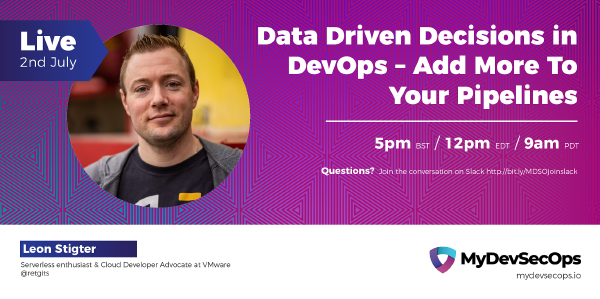
With everything going on in DevOps, I think we can safely say that building pipelines is the way to deploy your applications to production. But knowing what you deploy to production and whether it is actually okay needs more data, like security checks, performance checks, and budget checks. We’ve come up with a process for that, which we call Continuous Verification “A process of querying external systems and using information from the response to make decisions to improve the development and deployment process.” In this session, we’ll look at extending an existing CI/CD pipeline with checks for security, performance, and cost to make a decision on whether we want to deploy our app or not.
In a nutshell, Continuous Verification is about putting as many automated checks as possible into your CI/CD pipelines. These checks call out to external systems to validate performance, security, and cost — without asking your engineers to do that manually. The same systems that decide whether a deployment goes to production can also help engineers understand where the bottlenecks are. More checks in the pipeline means fewer manual tasks, less overhead, and better decisions about what actually ships. And yeah, maybe a bit more time at the beach.
Whether you’re a Product Manager or Developer Advocate, once you start presenting you think every talk has to be unique… spoiler alert, it doesn’t have to be.
Knative builds on Kubernetes to abstract away complexity for developers, and enables them to focus on delivering value to their business. The complex (and sometimes boring) parts of building apps to run on Kubernetes are managed by Knative. In this post, we will focus on setting up a lightweight environment to help you to develop modern apps faster using Knative.
At VMware we define Continuous Verification as:
“A process of querying external systems and using information from the response to make decisions to improve the development and deployment process.”
At #OSSDay, I got a chance to not only talk about what that means for serverless apps and how you can build it into your existing pipelines using tools like GitLab, CloudHealth, Wavefront and Gotling.
If you’ve read the blog posts on CloudJourney.io before, you’ve likely come across the term “Continuous Verification”. If not, no worries. There’s a solid article from Dan Illson and Bill Shetti on The New Stack that explains it in detail. The short version: Continuous Verification means putting as many automated checks as possible into your CI/CD pipelines. More checks, fewer manual tasks, more data to smooth out and improve your development and deployment process.
So far we covered the tools and technologies, Continuous Integration, and Infrastructure as Code aspects of the ACME Serverless Fitness Shop. This post is about observability.
If you’ve read the blog posts on CloudJourney.io before, you’ve likely come across the term “Continuous Verification”. If not, no worries. There’s a solid article from Dan Illson and Bill Shetti on The New Stack that explains it in detail. The short version: Continuous Verification means putting as many automated checks as possible into your CI/CD pipelines. More checks, fewer manual tasks, more data to smooth out and improve your development and deployment process.
In part one we covered the tools and technologies and in part two we covered the Continuous Integration aspect of the ACME Serverless Fitness Shop. This post is about Infrastructure as Code.